
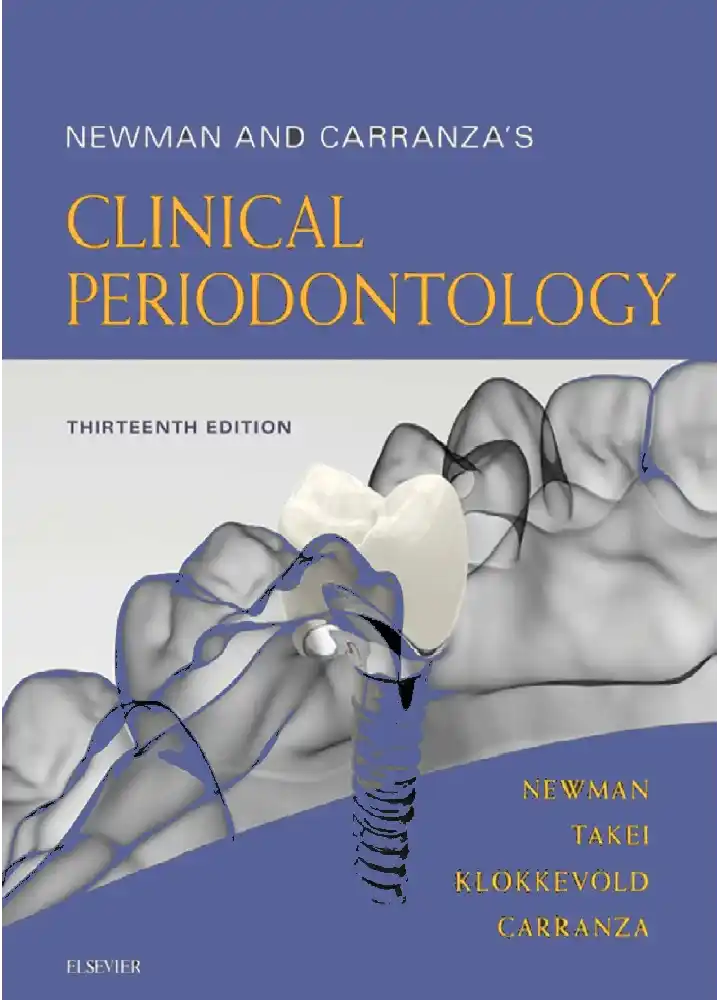
Clinical Periodontology and Implant Dentistry by Newman and Carranza is one of the foundational textbooks in periodontology, covering the principles and advanced practices for diagnosing, treating, and preventing periodontal diseases. Below is a summarized overview in 900 words:
CLINICAL PERIODONTOLOGY
Introduction to Periodontology
Periodontology focuses on the prevention, diagnosis, and treatment of diseases affecting the supporting structures of the teeth, including the gingiva, alveolar bone, cementum, and periodontal ligament. The book provides a comprehensive understanding of the biology of periodontal tissues and the etiology and pathogenesis of periodontal diseases.
Periodontal Anatomy and Pathophysiology
The text begins with an in-depth review of the anatomy of periodontal structures and their histology. Key features include:
- The gingiva, its keratinization, and vascular supply.
- The periodontal ligament’s role in anchoring teeth and shock absorption.
- Alveolar bone dynamics, including remodeling in response to mechanical forces.
- Cementum’s role in root protection and attachment.
It also delves into the microbiological and immunological aspects of periodontal disease, detailing the bacterial biofilms and host responses leading to tissue destruction.

Classification of Periodontal Diseases
Newman and Carranza emphasize the classification of periodontal diseases, as updated by the American Academy of Periodontology:
- Gingival Diseases:
- Plaque-induced gingivitis.
- Non-plaque-induced gingival lesions caused by systemic factors, medications, or infections.
- Periodontitis:
- Stages based on severity (Stage I-IV) and grades reflecting disease progression risk.
- Types, including chronic periodontitis, aggressive periodontitis, and periodontitis as a manifestation of systemic diseases.
- Periodontal Abscesses and Endodontic-Periodontal Lesions.
- Mucogingival Deformities and other periodontal conditions.
Diagnosis and Risk Assessment
The textbook provides detailed protocols for diagnosing periodontal diseases:
- Clinical measurements, such as probing depth, attachment loss, bleeding on probing, and furcation involvement.
- Radiographic assessments of alveolar bone loss.
- Microbiological and genetic tests for identifying risk factors and specific pathogens.
Risk factors, including smoking, diabetes, genetic predisposition, and poor oral hygiene, are evaluated to tailor preventive and therapeutic strategies.
Non-Surgical Periodontal Therapy
The cornerstone of periodontal treatment involves non-surgical methods:
- Scaling and Root Planing (SRP): Removing supra- and subgingival calculus and smoothing root surfaces to reduce bacterial load.
- Adjunctive Therapy: Use of antimicrobial agents (e.g., chlorhexidine) and systemic or local antibiotics for infection control.
- Host Modulation Therapy: Addressing inflammatory responses with drugs like subantimicrobial-dose doxycycline.
The importance of patient education in improving oral hygiene practices is emphasized.
Surgical Periodontal Therapy
Advanced stages of periodontal disease often require surgical interventions:
- Flap Surgery: Allows better access for debridement and contouring of periodontal tissues.
- Regenerative Procedures:
- Bone grafts, guided tissue regeneration (GTR), and the use of growth factors to restore lost periodontal support.
- Newer biomaterials like enamel matrix derivatives are highlighted.
- Mucogingival Surgery: Corrects gingival recession and aesthetic defects using techniques like connective tissue grafts.
- Crown Lengthening: Enhances restorative procedures by exposing more tooth structure.
Periodontal Maintenance
The book stresses the critical role of periodontal maintenance in preventing disease recurrence. This involves:
- Regular follow-ups for professional cleaning and re-evaluations.
- Monitoring of risk factors like systemic conditions or habits (e.g., smoking).
Studies indicate that adherence to maintenance schedules significantly reduces tooth loss in periodontal patients.
Periodontal Systemic Interactions
Newman and Carranza explore the bidirectional relationship between periodontal health and systemic diseases:
- Cardiovascular Disease: Chronic inflammation from periodontitis can contribute to atherosclerosis and other cardiovascular conditions.
- Diabetes Mellitus: Periodontal inflammation worsens glycemic control, while diabetes accelerates periodontal destruction.
- Pregnancy Outcomes: Periodontitis has been linked to preterm birth and low birth weight.
- Emerging links with conditions like rheumatoid arthritis, respiratory diseases, and Alzheimer’s are also discussed.
Implant Dentistry
A significant portion of the book addresses dental implants and their integration into periodontal therapy:
- Treatment Planning: Assessing bone quality and quantity, systemic conditions, and patient expectations.
- Surgical Techniques: Flapless surgery, immediate implant placement, and use of guided surgical techniques.
- Peri-implant Diseases:
- Peri-implant mucositis and peri-implantitis are examined in detail, with treatment protocols ranging from non-surgical to surgical approaches.
Advances in Periodontal Therapy
The authors highlight evolving trends and technologies in periodontology:
- Lasers in Periodontal Therapy: Applications in debridement, pocket reduction, and regeneration.
- Minimally Invasive Surgery: Use of microsurgical techniques and enhanced visualization tools.
- Digital Technologies: Cone-beam computed tomography (CBCT) and 3D printing for precise diagnostics and surgical planning.
Future Perspectives
Newman and Carranza emphasize emerging areas of research, such as:
- Genomics and Precision Medicine: Tailoring treatments based on genetic predispositions.
- Biologics and Tissue Engineering: Development of growth factors and stem-cell-based therapies for regeneration.
- Artificial Intelligence (AI): Applications in diagnosing and predicting periodontal disease progression.
Conclusion
Clinical Periodontology and Implant Dentistry serves as a comprehensive guide for dental professionals, blending foundational science with clinical applications. It equips practitioners to manage periodontal diseases effectively, integrate dental implants into care, and adopt cutting-edge therapies for optimal patient outcomes. The emphasis on the systemic impact of periodontal health underlines its importance in overall health, solidifying its role as an essential reference in dentistry.